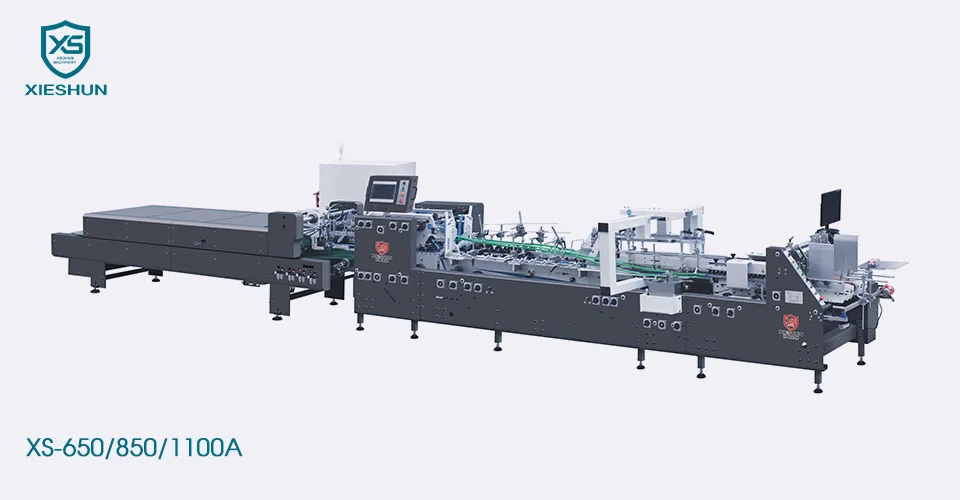
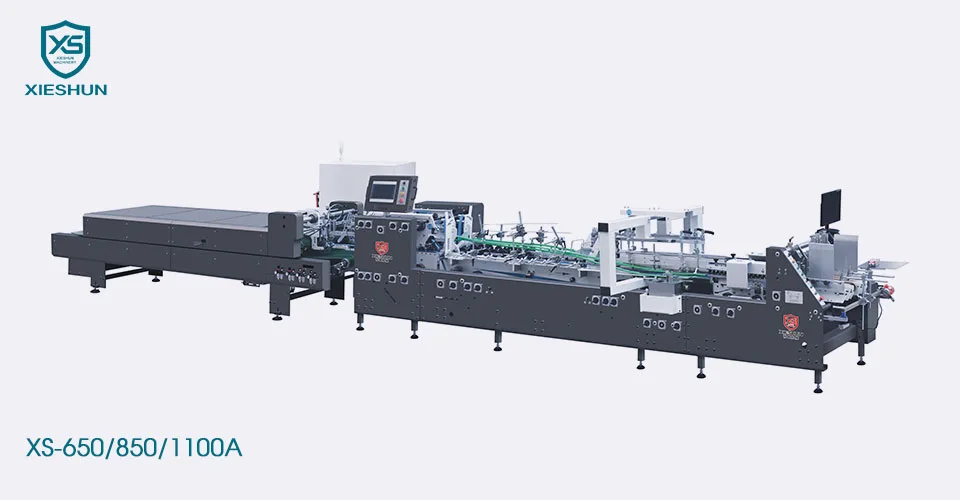
The landscape of packaging manufacturing has witnessed a significant shift, driven by the demand for higher throughput and precision. At the heart of this transformation lies advanced converting equipment, with the folder gluer for cardboard box applications becoming a central pillar for production lines worldwide. This article examines the technological advancements, process optimizations, and quality benchmarks that shape current industry standards, while avoiding simplistic metrics and focusing on engineering excellence.
Evolution of Folding and Gluing Technologies
Traditional carton assembly methods often relied on manual adjustments and fragmented workflow steps. Modern machinery integrates servo-driven motions and real-time monitoring systems. The equipment designed specifically for folding and gluing operations now offers modular configurations that adapt to various board types, from micro-flute to heavy-duty corrugated. One notable area of progress is the reduction of setup duration between job changes, achieved through computer-assisted memory functions. Manufacturers have also improved the accuracy of glue application systems, minimizing waste and ensuring consistent bond integrity across thousands of cycles. This evolution enables converters to respond swiftly to packaging design variations without sacrificing output stability.
Impact of Vision-Assisted Quality Assurance
Visual inspection modules have become an integral component of modern lines. Instead of relying on random sampling, closed-circuit camera arrays positioned at critical junctures detect misaligned panels, glue skips, or skewed folds. When integrated into a folder gluer for cardboard box production, these vision systems trigger immediate rejection of non-conforming units while logging data for preventive maintenance. This capability reduces material waste and protects brand reputation by preventing defective packaging from reaching end users. Furthermore, image processing algorithms now differentiate between acceptable process variations and true defects, decreasing false positives and maintaining line efficiency.
Structural Design Considerations for High-Speed Operation
Mechanical architecture plays a decisive role in achieving reliable performance. Key elements include the feeder section, which must handle stacks without double-feeding or jamming; the folding belts, which require precise tension control; and the pressing unit, which ensures secure sealing. Advanced machines employ independent motor drives for each module, allowing synchronized speed profiles that accommodate different blank geometries. Below is a comparative overview of design features commonly evaluated by production engineers:
Feature category
Standard design
Advanced design
Feeding system
Friction feed with manual side guides
Vacuum-assisted bottom feed with servo-aligned guides
Folding method
Fixed belt configuration
Independently driven folding belts with digital angle adjustment
Glue application
Wheel applicator with fixed pattern
Programmable jet or slot nozzle with pattern verification
Quality check
Manual off-line inspection
Inline vision system with reject gate
Control interface
Basic PLC with push buttons
Industrial PC with recipe storage and diagnostic logs
Engineers evaluating a folder gluer for cardboard box investment often prioritize the adaptability to both straight-line and lock-bottom styles. High-end models also support crash-lock bases and four-corner trays, expanding the product portfolio without requiring separate machinery. The trend toward compact footprints has led to cantilevered frame designs that facilitate cleaning and belt replacement, reducing downtime for maintenance crews.
Process Integration and Material Handling
Beyond the core folding and gluing station, upstream and downstream equipment integration defines overall line effectiveness. Automated pre-feeders, counter-ejectors, and strapping units work in concert with the central machine. A well-optimized line minimizes manual palletizing and reduces work-in-progress inventory. Modern control networks allow the central unit to communicate speed and reject signals to peripheral devices, creating a synchronized flow. For corrugated board applications, additional features such as squaring devices and trombone pre-folders are essential to handle board stiffness. These considerations directly affect the total cost of ownership and the ability to run mixed orders efficiently.
Material Compatibility and Setup Efficiency
Production managers face the challenge of processing diverse substrates, from thin folding carton to thick corrugated. The ideal equipment offers tool-less adjustments for rail width, belt pressure, and folding plates. Digital readouts or motorized positioning systems reduce changeover time to a few minutes. Additionally, glue viscosity management systems maintain consistent adhesive transfer across temperature fluctuations. When a facility processes a wide array of box styles, the flexibility of the folding-gluer platform becomes a critical success factor. Many operations now prefer modular units that can be upgraded with additional sections (e.g., pre-folding units or tucking stations) as demand evolves.
Reliability, Testing Protocols, and Factory Standards
Ensuring long-term reliability requires rigorous testing before equipment reaches the production floor. Leading manufacturers follow structured protocols: component-level inspection, sub-assembly run-in, and full-system functional testing. Electrical cabinets undergo thermal imaging to detect loose connections. Mechanical alignments are verified using laser measurement tools. Finally, each machine is subjected to a continuous production simulation using representative box blanks, where all sensors and reject mechanisms are validated. Such comprehensive validation directly translates to shorter on-site commissioning and higher uptime from day one.
When evaluating a folder gluer for cardboard box supplier, production professionals examine the consistency of glue lap positioning and the ability to maintain squareness at rated speeds. Another significant aspect is the availability of remote diagnostic support, which allows technicians to analyse error logs and adjust parameters without travel delays. Documentation that includes lubrication charts, part lists, and electrical schematics further supports independent maintenance teams.
The integration of industrial Internet of Things (IIoT) capabilities is becoming standard. Real-time dashboards display overall equipment effectiveness (OEE), fault categorization, and predicted maintenance alerts. By aggregating data from the folder gluer and peripheral devices, plant managers can identify recurring adjustments and schedule proactive interventions. Some platforms also offer recipe management across multiple lines, ensuring consistent setup regardless of operator experience. As artificial intelligence matures, adaptive control loops may soon automatically compensate for board humidity variations or blank warpage, further reducing waste and manual intervention.
Sustainability Considerations in Folding-Gluing Operations
Environmental targets influence packaging machinery design. Reduced glue consumption, energy-efficient motors, and minimized makeready waste are now common specifications. Advanced folder gluers can run on recycled board grades with higher dust content, thanks to improved vacuum systems and anti-static features. Furthermore, precise folding reduces the need for over-taping or secondary reinforcements. The ability to process thinner caliper boards without buckling supports source reduction initiatives. Consequently, investing in high-performance folding-gluing equipment aligns with both economic and ecological goals.
Comprehensive Service and Continuous Improvement Commitment
After-sale support structures differentiate proficient manufacturers from average ones. A responsive technical support team, availability of critical spare parts, and regular training sessions for operators contribute to sustained machine performance. Many suppliers now offer remote assistance through augmented reality glasses, enabling experts to guide on-site staff through complex troubleshooting steps. Additionally, partnerships with logistic providers ensure that rush parts delivery can be arranged with minimal delay. These service elements are essential for production environments where unplanned downtime carries significant cost implications.
Among industry participants, Wenzhou Xieshun Mechanical Equipment Co., Ltd. has established a systematic approach to quality assurance and technological refinement. The company’s standard assembly workshop is designed to handle multiple configuration projects concurrently, each tailored to specific operational needs. Strict incoming material inspection protocols guarantee that every component—from drive belts to sensors—meets prescribed tolerances before assembly. Every completed machine undergoes comprehensive functional testing using representative cardboard blanks, ensuring that the end user receives equipment ready for immediate, reliable production. The company also provides customization services that adapt the folding-gluer configuration to unique packaging lines, whether for high-speed e-commerce cartons or intricate rigid box formats. By persisting in honest management and continuous investment in new product R&D, Wenzhou Xieshun demonstrates a commitment to unsurpassed quality and service. Such dedication allows converters to confidently scale their operations while maintaining exacting standards in every box produced.
In conclusion, the modern folder gluer for cardboard box represents a convergence of precision mechanics, smart sensing, and adaptive control. Evaluating available technologies through the lenses of reliability, material flexibility, and total production cost leads to informed capital decisions. As packaging designs continue to evolve in complexity and volume, the folding-gluing platform will remain a cornerstone of efficient converting operations.
We use cookies to offer you a better browsing experience, analyze site traffic and personalize content. By using this site, you agree to our use of cookies.
Privacy Policy